

The Butterfly Effect
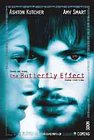 The Butterfly effect was coined by scientists who discovered that small changes can have dramatic consequences over long distances (both in space and time). A hurricane in the U.S. may have been set off by the flap of a butterfly wing in Honk Kong. The film applies this idea to the life of individual people. The first third of the movie is not very exciting, but then the drama picks up as we are suddenly drawn into different possible realities. The main character has problems with memory either because of a genetic predisposition or childhood mistreatment. As he is trying to remember what happened, we are presented with different versions of the past and we no longer know which one is true. Small changes in childhood events lead to very different adult lives.
The Knight “Georg Murmann”
 Reading Don Quixote I learn great deal about the medieval literature about knights. Cervantes spoofs these stories in his famous novel. Apparently, there was also a “Murmann” knight, born in 1766. [Now I know why I am such a chivalrous kind of guy:) ] Georg Murmann entered the military in 1783 and spent all his life as a brave soldier, so we are told. For his heroism in many a battle fought first against the Turks and then the French he was made in 1811 a knight of the Maria Theresia order. He retired from the military July 20, 1820. The picture represents his coat of arms that he worked on during his retirement. So did his life make a difference? If you count up the number of streets named after a person to make this judgment, the answer is—a little. One small street bears his name.
.
Continue ReadingCast Away
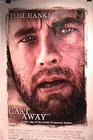 I rented this movie because I heard that Tom Hank’s who plays an FedEx employee shipwrecked on a small island entertains you all by himself for an hour and a half. It is not true. The movie is painfully slow in large part because it has nothing significant to say. I had so much time while watching the film that I almost wrote an entire script for a another Robin Crusoe movie. In my script the stranded person, contrary what you would expect of the genre, does not get rescued but after a long life dies all alone on peacefully island. Because the person strangely enough lived out an interesting life on the island you are not upset about this end. Rather you would leave the cinema telling yourself yourself: Hey, if one can have a meaningful life all by yourself on a small island one should have a great life in the midst of civilization! Cast Away is predictable and boring.
Don Quixote
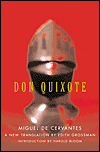
One of the most compelling moments in Guess Who’s Coming to Dinner occurs when a son points out to his father that they have fundamentally assymetrical duties toward one another. Three days ago I started to read Don Quixote. It is hard to put the book down. I just came across a wonderful passage that reminded me of the aforementioned scene in Guess Who’s Coming to Dinner. Here the concern is the assymetrical relationship between the lover and beloved. Read for yourself.
Bad Education
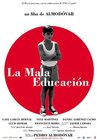 After seeing Almodovar’s two recent movies Talk to Her and All about my Mother, I left the theatre deeply satisfied. Both films were extraordinary pieces of cinema. I felt different about Bad Education. It took me some time to figure out what made this a good film yet noticeable inferior to his two previous efforts. Autobiographical material can lend a piece of drama authenticity. But without some distance to the experience, it can also get in the way of communicating the significance of a piece of art. A more appropriate title for the film would have been “Lost Love.” Almodovar made the mistake of mixing three types of feelings, Pedophilia (Bad Education), Homosexuality, and Love as if they were the same thing. They are not. In doing so, Almodovar trivializes the crimes pedophilic adults (here catholic priests) commit against the children they are entrusted with. Despite this shortcoming Bad Education has much to offer. It is filled with layers upon layers of narrative and meaning, inviting you back so that you see it again to catch it all. The single most gratifying feature of the film is the spectacular acting of Gael García Bernal.
Experiencing an Epiphany
It is so much fun to watch children because for them everything is new. Teenagers already know quite a lot about the world, but they are still willing to experiment with new identities and become someone entirely different from one day to the next. When people reach middle age, this all seems to stop. People typically settle for stable identities, careers, and seek durable relationships. For good reason: To function society needs dependable adults. So it is really something extraordinary when individuals in midlife radically change their relationship to the world. I recently met an investment banker who decided to leave Wall Street and become a priest. I was curious how this happened. “It was a calling. I had to do it.” He went on to tell me that he is much happier now. Today I encountered in the New York Times Hollywood soap opera producer who also seemed to have had a epiphany. He also felt a strong calling to dramatically change his career. I am getting very curious about what happens psychologically when people experience such a calling in midlife. See for yourself.
Continue ReadingGrapes of Wrath
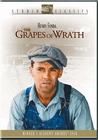 One reason why people see the same film in very different ways is that we filter it through our past experiences and hopes for the future. Grapes of Wrath, made in 1940, documents the hardship of one family that can no longer make a living on the depleted soil of Oklahoma and leaves the Dust Bowl for California. The family believes California to be the land of milk and honey. But during the Great Depression jobs are very hard to come by even in California. The family finds it very difficult to put enough food on the table. In this struggle for survival, the family disintegrates in part because individual members think they can survive better individually. I once heard that President Roosevelt through his New Deal polices saved “Capitalism” in the United States. This film offers a portrait of how the Great Depression pushed a large number of American families into poverty and despair, shaking the foundation of America’s belief in inevitable progress. Watching the family pack up all their stuff on one truck and then drive to California constantly brought back to my memories of The West, a documentary about how California, Oregon, and Washington State were first settled a hundred years before the Great Depression. I noticed that making it across the Rocky Mountains and the dessert with horse and wagon was incomparable harder and more dangerous in 1830 than in 1940 with a motorized truck. I also marveled about the portrayal of the notion of a “family.” I always thought that American immigrants, with the exception of Mafia crime rings, had left behind in Europe the idea of a family as an extended household. The film romanticizes the American family. It implicitly celebrates the family as the most important social organization in agricultural societies and mourns the loss of strong emotional bonds between blood relatives apparently brought about by industrialization.
The Tale of the 1002nd Night
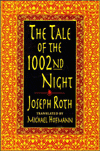 This tale is magnificient. Roth became famous for his novels Job and Radetzky March. For the contemporary reader Radetzky March is tedious. The slow decline of the Austrian Empire by itself can no longer hold our attention without connecting it to a larger, more universal story. The Tale of the 1002nd Night, in contrast, feels fresh, fast-paced and contemporary because Roth places into the background the unresolved question of how the Muslim and Christians will coexist in the industrial age. In the foreground are the stories of individual human beings (the Shah of Persia, an Austrian aristocrat, a working class girl) who struggle to live in their particular place and position, and who become connected through small chance events. I continue to be surprised how sharp an eye Josepth Roth has and how well he can describe what he sees in the world. Roth knows the human heart in all its complications and weaves together astonishingly gripping tales.
Interesting Article in the New Yorker: “The Mistress’s Daughter”

The New Yorker once in a while publishes personal histories that are compelling because they touch upon core issues our lives, are deeply thought through, and are superbly written. The one I read last night by Amy Holmes is available on the web.
Rachmaninoff “Vocalize” (Op.34 No.14)
 Oh, Sergei, What are you doing to our hearts? I just listened this piece for the first time as a piano and violin duet. Very beautiful. But it is even more piercing when it is sung by the human voice… Oh, Sergei, What are you doing to our hearts?

© 2026 Peter Murmann. Powered by ExpressionEngine.


